
Kingdom Two Crowns is the third installment in the Kingdom series, and easily the most complete version of the formula. It takes the minimalist, side-scrolling kingdom-builder foundations of Kingdom and New Lands and finally gives them long-term structure, replayability, and meaningful progression.
If you enjoyed New Lands, you’ll enjoy Two Crowns even more. I did. Most of the frustrations I had with the earlier games, especially winter and the feeling of endless survival, are directly addressed here. I’m writing this after countless nights without sleep and over 500 hours in the game, the review, guide, and opinions start below.
Kingdom Two Crowns Release Timeline (Base Game + DLC)
Let’s quickly go through everything that Kingdom Two Crowns has to offer and what the DLCs bring with them.
| Game / DLC | Released In | What It Added |
| Kingdom Two Crowns | December 11, 2018 | A more fleshed-out take on the series |
| Kingdom Two Crowns Shogun | December 11, 2018 | Free, new setting, new troops |
| Kingdom Two Crowns Norse Lands | November 15, 2021 | New setting, harder difficulty, new troops |
| Kingdom Two Crowns Call of Olympus | October 8, 2024 | New setting, weapons for players |
I’ve been playing Kingdom since its early days, as a Flash game, back when it felt more like an experiment than a full title. I enjoyed the first game and spent a fair bit of time with New Lands, but both left me with the same lingering thought: this is a great idea that doesn’t quite go far enough. Two Crowns is where that changes.
My Kingdom Two Crowns Review: 500+ Hours That Felt Like 50
At its heart, Kingdom Two Crowns is still the same minimalist side-scrolling strategy game.
You ride left and right, recruit vagrants, assign jobs, expand your settlement, and brace yourself every night as the Greed come to steal your crown.
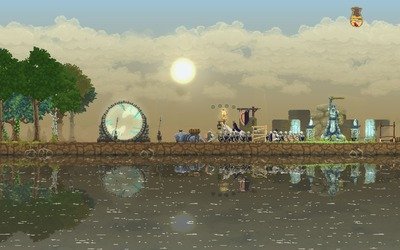
What’s different is how much more room the game gives you to think long-term, late-game additions for both you and the enemy to keep the game challenging, and DLC that range from cosmetic changes to a subtle overhaul of the core gameplay loop.
What’s New to the Formula
In earlier Kingdom games, survival felt temporary. Winter was brutal, often endless, and once things went wrong, they went wrong fast. Two Crowns fixes that without making the game feel easy. Winter still hurts, but it’s no longer a hard stop.
Farmers can forage berries, pikemen and ninjas can fish, and if you plan properly, you can actually stay afloat until spring returns. That one change alone makes the entire experience feel much fairer than previous entries.
There’s also a clear sense of purpose now. Instead of surviving for survival’s sake, you’re working toward something concrete, permanently destroying the Greed by blowing up their caves on every island. When you finally do it, the game ends. That sounds simple, but it’s incredibly satisfying in a series that previously felt endless by design.
The World Feels Bigger, Not Just Longer
Two Crowns introduces persistent islands, and that’s where the game really starts to shine. Travelling between islands no longer feels like abandoning progress.
You can go back. You can see old kingdoms still standing, sometimes decayed, sometimes thriving if you plan well. Building lighthouses so your boat survives return trips might seem like a small thing, but it fundamentally changes how you think about expansion.
Islands become places you manage, not disposable runs you burn through. I found myself going back to established islands with lighthouses often when I was running low on gold, or I wanted an extra Knight to support the walls against greed monsters.
Exploration Almost Always Rewards Generously
Earlier Kingdom entries felt way more hostile to me than Kingdom Two Crowns or its DLCs. The level of detail this world has to offer made me genuinely want to explore every bit of each island.
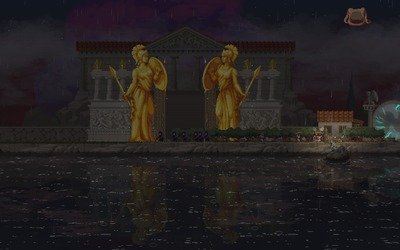
Sure, most of these runs were made to recruit more people to either defend my base or tend to the fields and make me gold. However, I’d be lying if I said the dense forests didn’t make me want to look around until a Greed Portal blocked my path.
There’s also far more to discover. Shrines, ruins, hermits, mounts, and hidden upgrades give exploration real weight. You’re not just moving outward to build walls, you’re looking for advantages that can define the rest of your run.
Nights Are No Cakewalk
One thing Kingdom Two Crowns never lets you forget is that the night belongs to the Greed.
During the day, the game feels almost peaceful. You explore, expand, recruit, and make small decisions that seem harmless in isolation. At night, all of that planning is tested at once. The Greed don’t just attack your walls, they exploit weak points you didn’t realize you left open!
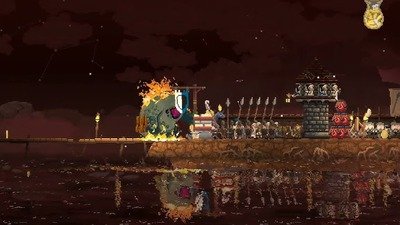
What I appreciate is that nights rarely feel unfair. When things go wrong, I can usually trace it back to something I did earlier, pushing too far into the forest, hiring too few archers, or assuming one more wall upgrade could wait until morning. The difficulty ramps steadily, and later enemies make positioning and preparation matter far more than wall upgrades alone.
Stone walls take forever to upgrade to the point where some upgrades I started at sunrise would take up to sunset to complete. While the wall upgrades themselves were complete before any greed showed up, what made me pucker up were my troops that took their sweet time coming over to defend the newly upgraded wall. Especially the artillery!
Kingdom Two Crowns DLCs: The Good, The Bad, and the Beautiful
Whether a Kingdom Two Crowns DLC feels “worth it” really comes down to what you consider meaningful change. If your baseline is simple, you’re still on a mount, still dropping coins, still moving left and right, then yes, every DLC is technically the same game.
That argument isn’t wrong, but it also flattens a lot of nuance. Mechanically and structurally, the DLCs differ far more than they appear at a glance, and those differences absolutely affect how the game feels over longer runs. Let me tell you why the DLCs in Kingdom Two Crowns are worth getting below.
Kingdom Two Crowns Shogun DLC
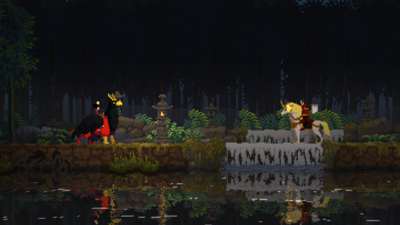
The Shogun DLC is the most straightforward reinterpretation of the base game. It swaps medieval Europe for feudal Japan, replaces pikemen with ninjas, and reskins buildings, units, and currency to match the theme.
Even the forests feel slightly denser, which subtly affects how and when you expand. In practice, though, the core flow remains almost identical. My priorities didn’t really change, and neither did my long-term planning. I still followed the walls > farming > archers > ninjas loop on later islands, similar to the base game.
I did enjoy the idea of having ninjas to attack greed hordes from the back, but Blood Moon nights, when greed swarms were massive, would absolutely annihilate them due to their low health once exposed. That doesn’t make Shogun bad, far from it, actually. It’s enjoyable, stylish, and a great excuse to replay the game if you’ve been away from it for a long time.
Kingdom Two Crowns Norselands DLC
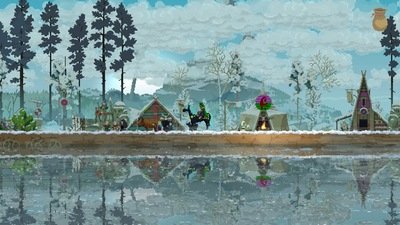
Norse Lands is where the DLCs begin to demand more from the player. The Viking theme isn’t just cosmetic here, it introduces new mechanics, a different tech progression, and active God abilities that directly influence combat and decision-making.
The pace is harsher, mistakes are punished more quickly, and sloppy planning catches up to you faster than it does in the base game. I liked that added pressure, but it’s also less forgiving. Coins are harder to come by, winters are absolutely brutal, and you generally need to take your time to progress because lower-level walls and soldiers don’t survive long.
Around the third island, you will have unlocked berserkers and higher-level walls, which will help you remove greed portals without losing too many soldiers, but getting there is not easy at all. The real pro here is the ship itself, which is modelled after a Viking Longship. It’s cheaper and quicker to build, which means you can bring reinforcements or extra villagers quickly to your new outpost when entering new islands.
Kingdom Two Crowns Dead Lands DLC
Dead Lands leans much harder into atmosphere. The tone is darker, the visuals moodier, and the monarchs come with unique traits inspired by Bloodstained. Those traits do add variety and can slightly change how a run unfolds, especially early on.
Still, the overall structure remains familiar. You’re not learning a new rhythm so much as playing the same song in a different key. I had fun with it, and it’s a nice way to keep the game fresh after finishing the base campaign, but it feels more like a thematic variation than a true evolution of the formula.
I absolutely hated playing through this DLC and only finished it because I had to write this review. It’s not the difficulty spike or the atmosphere, the Kingdom Two Crowns Dead Lands DLC was just underwhelming because I approached it last, and the bar was set very high by Call of Olympus.
Kingdom Two Crowns Call of Olympus DLC
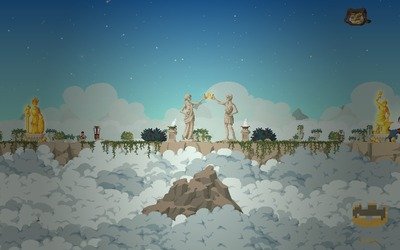
Kingdom Two Crowns’ Call of Olympus is the only DLC that genuinely changes how the game feels moment to moment.
Visually, it’s easier to read than Shogun or Norse Lands, especially during hectic nights. Mechanically, it shifts the game away from a mostly defensive posture and toward a more aggressive, goal-driven structure.
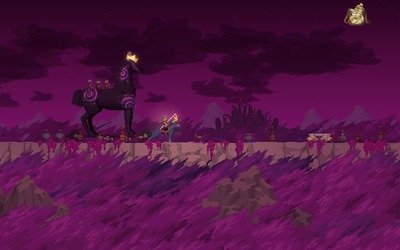
You’re no longer just holding the line, you’re actively pushing forward with a clear view of Mount Olympos in the background. The climb brought forward mythical beings, large god-focused objectives, and structured progression give the campaign a sense of direction that earlier DLCs don’t quite reach.
For the first time in the series, your monarch can wield divine weapons against the Greed, which fundamentally changes how encounters feel. There are no cliff portals, no forced backtracking, and no requirement to revisit old islands unless you mismanage gems. You won’t find every statue, mount, or hermit in a single run, and that unpredictability is intentional for the most part.
My First-Person Starter Guide (How I Tackle Cursed Difficulty)
When I first started playing Kingdom Two Crowns, I kept making the same mistake: expanding too fast and assuming I could fix problems later.
That approach works briefly, but it almost always collapses once winter or stronger Greed waves hit. Here’s my quick guide to get started with Kingdom 2 Crowns and stepping up to hard or the dreaded cursed difficulty:
1. Early Game Strategy: Start Recruiting Peasants to Work For You
Early on, I aim for a small, stable force, usually three or four archers, and a couple of builders to focus on solid inner defences before pushing outward.
My first few days are also spent cutting down trees because you never know when an extra coin might fall down from them. This is also where you need to maintain a delicate balance, immediate surroundings are okay to be stripped down, but don’t keep forests too far away.
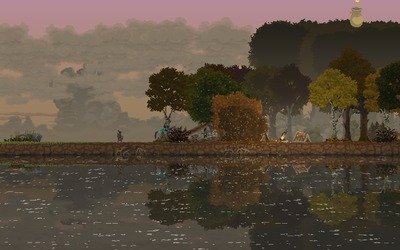
No forest means no deer spawns, this is fine on lower difficulty, as rabbits produce one coin when killed, but on higher difficulty levels, you want archers to hunt the occasional deer from time to time.
You can run past the deer and chase them towards your camp so your archers have an easier time taking them down.
2. Winter Survival Planning and Farming: Non-Negotiables You Should Remember
I delay farms until I understand where winter is going to land, because over-expansion early is the fastest way to collapse. Winter planning is non-negotiable, and you need to keep some coin with your banker so you don’t rely entirely on foragables.
Early farms can look profitable, but if winter hits before they pay for themselves, they become dead weight. I always make sure I have some form of income that doesn’t rely on crops, usually fish via pikemen or ninjas, berry bushes if they spawn nearby, and at most one boar kill per winter.
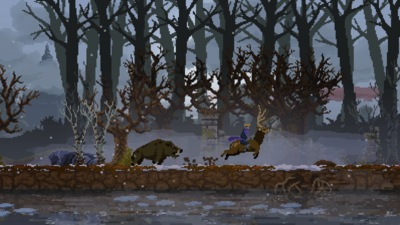
Each day, the banker generates 7% as interest, but it’s never above 8 coins. This means you need to keep roughly 120 coins to take full advantage of his services. The early game of Kingdom Two Crowns and DLCs is the most important bit, and the first winter can make or break your run. Keep that banker well funded and try to coast on the interest he provides.
Before winter arrives, I make sure I have reliable income sources that do not depend on crops:
- Fishing income from pikemen or ninjas, which works even during winter
- Berry bushes, if they spawn close enough to the kingdom to be used safely
- A single boar kill per winter at most, saved for when I actually need the coins
If winter starts and I am already low on gold, the run is effectively over. Kingdom Two Crowns gives you tools to survive winter, but only if you plan for it ahead of time.
3. Island Management: Never Leave a Weak Kingdom Behind
Before I leave an island, I treat it like an investment I expect to return to. At a minimum, I make sure the island has:
- A built lighthouse, so I do not have to rebuild the boat later
- A banker with stored gold, which keeps the economy running in my absence
- Stone-tier walls or better on both sides of the kingdom
Leaving behind a weak island almost guarantees decay problems later. Rebuilding collapsed walls and rehiring lost units costs far more time and gold than stabilizing the island before leaving.
This only works from the second island, and up once you’ve unlocked the stone quarry. It is a hefty unlock, costing two coins but this one upgrade single-handedly opens up routes for you to recruit knights and promote them. Don’t skip or sleep on this! Yes, you will be leaving the first island behind, and it will be in ruins when you come back.
4. Mid-Game Decision-Making: When The Game Starts Getting Easy
Once stone technology is unlocked and the economy is stable, I start expanding more deliberately. In practical terms, my mid-game approach usually looks like this:
- I only push outward after nearby walls are already upgraded and capable of holding night waves
- I clear portals one side of an island at a time, instead of splitting effort and leaving gaps
- I avoid queuing multiple upgrades late in the day. Workers can wander too far and get caught outside walls at night
Hermits start to matter a lot in the mid-game, and choosing the right ones makes everything smoother. The Hermit of Baking is almost always my first pick if I can help it. Here’s why:
- Vagrant camps are much farther from the kingdom on later islands
- Bakeries pull vagrants toward your base instead of forcing risky trips
- Rebuilding after losses becomes faster and less tedious
The Hermit of Stable is another strong mid-game option:
- It lets you store and switch between mounts without backtracking
- You are not locked into a single mount that may struggle during winter
- Movement across larger islands becomes easier to manage
I am more selective with the Hermit of Tide at this stage:
- Mighty ballistas are powerful but best used once walls are already upgraded
- Building them too early often sends workers into unsafe areas
- I usually treat them as a late mid-game or early late-game upgrade
One thing I actively avoid during the mid-game is upgrading too many structures at once. It is easy to underestimate how far workers will travel, and losing them because of poorly timed upgrades costs more time and gold than it is worth.
5. Late Game and Ending: Big Risks For Bigger Rewards
By the time the late game begins in Kingdom Two Crowns, the tone of the run changes. You already have the tools you need. The question is no longer whether you can survive the Greed, but how long you’re willing to keep holding ground instead of finishing the job.
Once knights are available and iron technology is online, I stop treating portals as threats to manage and start treating them as problems to remove. Night waves will only continue to scale, so delaying action usually makes the next push harder rather than safer. This is where I move quickly and:
- I push portals deliberately and consistently once I have two knights on one side
- I expect blood moons to happen and plan around them rather than trying to avoid them
- I focus on permanently clearing islands, not maintaining endless defenses
Hermits also change in value once the late game starts and become S tier support options. The Hermit of Tide becomes much more attractive here:
- Mighty ballistas handle large enemy groups efficiently
- They reduce pressure on archers during heavy waves
- They are especially useful when preparing for portal assaults
The Hermit of Valor starts to matter as well:
- Extra armories allow more knights to be fielded on a single side
- This makes portal pushes more reliable
- It reduces the chance of stalled attacks caused by archer losses
At this point, I am far less cautious about spending gold. If an upgrade helps end an island faster, it usually pays for itself. Sitting on resources rarely helps in the late game, because unfinished islands continue to drain time and attention.
By this point, I also have two to three farms with six farmers each, which is the maximum possible number.
You manage to find and activate the Statue of Scythe. This shrine costs one gem to unlock and seven coins to activate and provides an additional two farmers to your farm if you have extra farmers sitting around.
A blood moon will start on the opposite side of your kingdom once you’ve dealt with a greed portal on one side. Make sure your catapult has the buffed-up fire rounds to keep smaller enemies at bay and pikemen on the ready for bigger foes should they breach one of your walls.
Kingdom Two Crowns on Other Platforms: Phones, Tablets, and Laptops
One of the biggest advantages of Kingdom Two Crowns is how easily it runs across different platforms.
Playing Kingdom Two Crowns on Laptops and Macs, performance is essentially guaranteed. I tested Kingdom Two Crowns on a MacBook Air M2, and it ran flawlessly from start to finish. Frame rate was smooth, night waves never stuttered, and load times were short.
Speaking of MacBooks, we recently released our complete guide to MacBook Games on Steam and Kingdom Two Crowns was one of our top picks. Check out that article to find more Mac games to play.
Kingdom Two Crowns is also available on mobile, including iOS and Android, and while it technically runs fine, this is where personal comfort starts to matter more than raw performance.
I did not enjoy playing Kingdom Two Crowns on a phone. The game works, but the screen is simply too small for the kind of precise movement and awareness the gameplay demands. During busy nights, it becomes harder to track enemies, workers, and build locations, and fine positioning feels more awkward than it should.
Tablets are where Kingdom Two Crowns really shines outside of a laptop. I played extensively on an iPad 9, and the experience was excellent. The larger screen makes a noticeable difference when managing your kingdom, especially during late-game nights when multiple threats are happening at once.
Co-Op in Kingdom Two Crowns and DLC: Better Than I Expected
One feature I did not think I would care much about in Kingdom Two Crowns was co-op, but after spending time with it, I’m convinced it fits the game far better than it has any right to.
Two players can share the same kingdom either locally or online, and instead of feeling chaotic, it actually makes the game easier to manage.
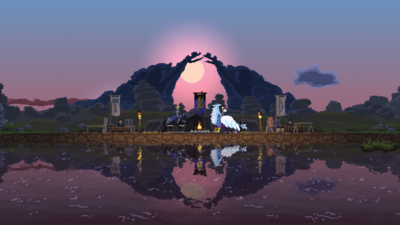
The biggest difference is mental load. Where solo play asks you to constantly juggle exploration, recruitment, and defense timing, co-op naturally splits that responsibility. One player can focus on scouting islands, shrines, and portals, while the other stays closer to the kingdom, managing upgrades and reacting to night waves.
I also think co-op works especially well for newer players. Kingdom Two Crowns can be punishing when you are still learning how systems interact, and having a second player makes those early mistakes easier to recover from. It does not replace the solo experience, but it offers a more forgiving and approachable way to learn the game while still respecting its core design.
Kingdom Two Crowns and DLCs: The Most Complete Version of Kingdom
After spending 500+ hours with the base game and every DLC, Kingdom Two Crowns feels less like a sequel and more like the version of Kingdom the series was always building toward.
It keeps the minimalist foundation intact, but adds enough structure and long-term purpose that the experience no longer feels temporary or aimless. Kingdom Two Crowns Shogun and Kingdom Two Crowns Dead Lands are best viewed as thematic variations that keep familiar gameplay feeling fresh.
Kingdom Two Crowns Norse Lands goes further, introducing tougher mechanics and a more demanding pace that rewards careful planning. And when it comes to premium content, the standout among the DLC Kingdom Two Crowns lineup is clearly Call of Olympus, which reshapes progression and encourages a more forward-driven approach.
Taken as a whole, Kingdom Two Crowns DLC content enhances rather than fragments the experience. Whether you play only the base game or explore every expansion, this is the version of Kingdom that feels finished. If you are new to the series, Kingdom Two Crowns is the best starting point. If you tried earlier entries and bounced off, this is the one most likely to change your mind.
About The Author